The Classic, Sustainable Choice for Modern Food Packaging: Tin Cans
📋 Executive Summary
In an era increasingly shaped by plastic reduction mandates and circular economy initiatives, food-grade tinplate cans stand as the most proven, infinitely recyclable, and functionally secure barrier packaging in global distribution. From high-speed filling line compatibility to vacuum self-seal (Pressitin) retail formats, tinplate delivers 100% imperviousness against light, oxygen, moisture, and microbial ingress without requiring synthetic preservatives.
1. Why Tinplate Remains the Gold Standard for Modern Food Packaging
For more than two centuries, metal canning has safeguarded global food supplies. However, modern food-grade tinplate is fundamentally different from historical heavy-gauge tin. Today’s tinplate packaging is engineered from precision cold-rolled low-carbon steel electroplated on both surfaces with microscopic layers of pure tin (Sn). This metallurgy achieves an unmatched balance of structural tensile rigidity, high ductility, and active electrochemical corrosion resistance.
When evaluated against plastics, paperboards, and composite pouches, tinplate containers resolve the central vulnerability of modern food transit: environmental permeation. Oxygen, water vapor, and ultraviolet (UV) light represent the primary catalysts for lipid oxidation, nutrient degradation, and flavor staling. Tinplate provides an absolute zero-transmission barrier, preserving volatile aroma compounds and sensory freshness across shelf lives spanning 24 to 36 months.

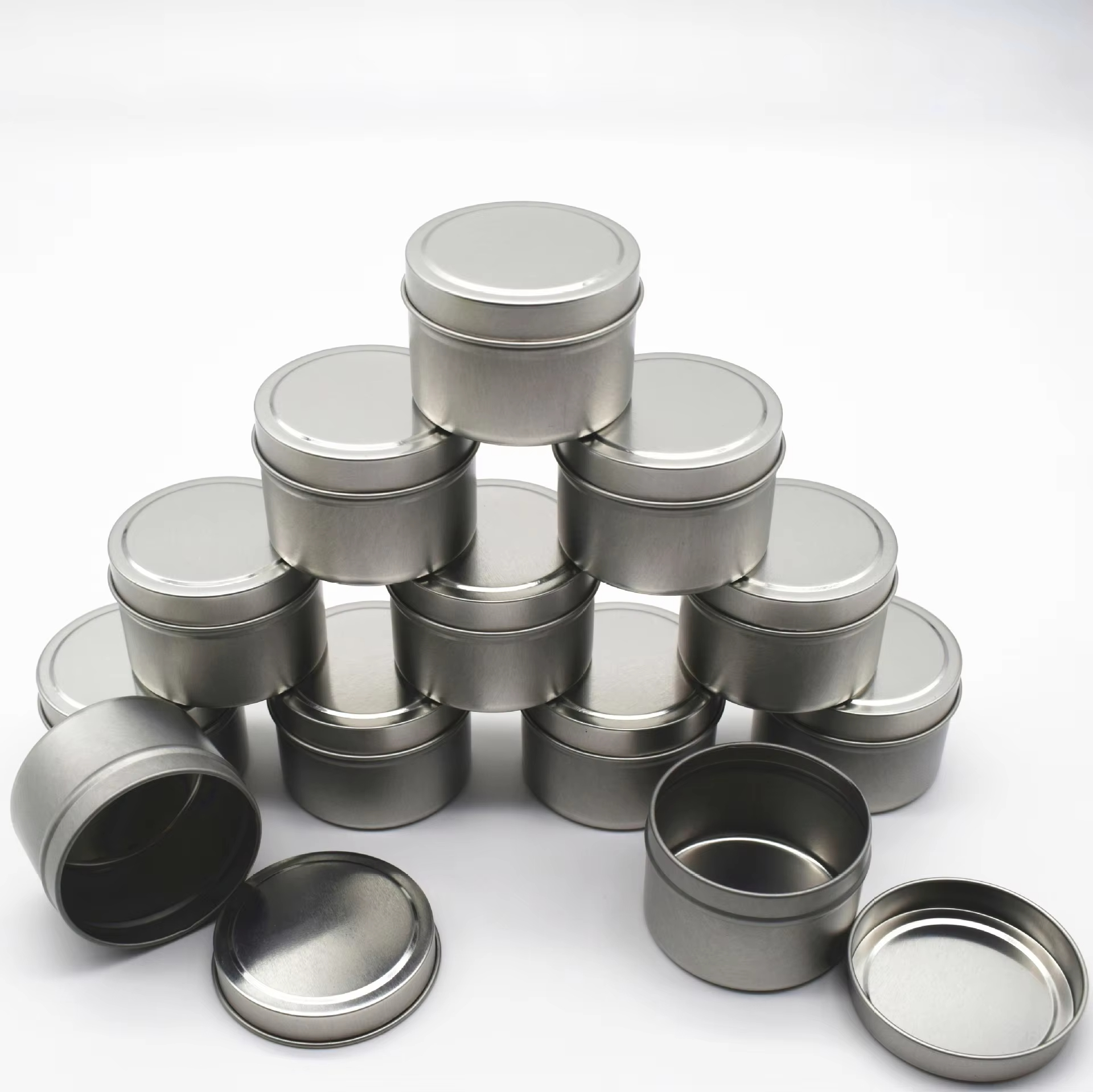
Airtight Food-Grade Round Cans (Pressitin Series)
Engineered for confections, loose-leaf teas, dried snacks, and artisanal foods. Features tamper-evident closure, hermetic air-tightness, and high-resolution offset label customization.
Offset CMYK/Pantone
Stackable Taper
Self-Seal Ring-Pull Cans (No-Tools-Needed)
Precision 100ml / 3.5g format with peel-and-press manual base seal and easy-open ring pull lid. Ideal for specialty snacks, tuna/seafood sampling, and premium retail presentation.
Manual Snap Seal
Smooth Curled Rim
2. The Environmental Architecture: Infinite Recyclability & Zero Plastic Migration
The global shift toward sustainable packaging has exposed the limitations of multi-material pouches and single-use plastics. Multi-layer laminates (such as metallized PET/PE pouches) are practically unrecyclable in municipal waste streams because separating thin film layers requires cost-prohibitive chemical processing. In contrast, tinplate is a permanent material that can be recycled infinitely without loss of metallurgical purity or tensile strength.
Infinite Closed-Loop Recycling
Steel and tinplate are the most recycled packaging materials on earth. Every ton of recycled tinplate conserves over 1.4 tons of iron ore and reduces carbon emissions by upwards of 70% compared to virgin ore processing.
Effortless Magnetic Sorting
Unlike aluminum or plastics which demand complex optical sorting, tinplate containers are 100% magnetic. Automated municipal recovery plants capture over 95% of metal cans with zero manual intervention.
Zero Chemical Migration
Food-grade compliant barrier lacquers eliminate direct contact between food acidulants and steel substrates, completely eliminating BPA, phthalate, or microplastic leaching into food items.
Logistical Weight & Space Efficiency
Tapered nested designs allow empty cans to nest securely inside one another, cutting inbound transport volume by up to 80% and drastically reducing logistics-associated freight emissions.
3. Packaging Material Engineering Matrix: Tinplate vs. Alternatives
To assist packaging engineers, procurement directors, and food brand managers in selecting the optimal packaging medium, the following comparative engineering matrix benchmarks performance across primary commercial criteria:
| Evaluation Metric | Food-Grade Tinplate (Qiming) | Aluminum Cans | Rigid Plastic (PET/HDPE) | Glass Jars |
|---|---|---|---|---|
| Oxygen & Light Barrier (OTR / UV) | 100% Impervious (Zero Transmission) | 100% Impervious | Permeable over time (OTR > 0) | UV permeable (unless amber) |
| Mechanical Impact & Drop Strength | Superior (Non-shattering, ductile) | Moderate (Prone to denting) | High impact resilience | Very brittle (Shatter risk) |
| Thermal Retort / Vacuum Compatibility | Up to 121°C–130°C Vacuum Autoclave | Moderate autoclave capability | Limited heat resistance (<85°C) | Thermal shock vulnerability |
| Recycling Rate & Sorting Efficiency | Highest (Magnetic recovery) | High (Eddy current sorting) | Low to moderate (<30% globally) | Moderate (Weight penalty) |
| Shelf Life Extension Capability | 24 to 36 Months | 12 to 24 Months | 6 to 12 Months | 18 to 24 Months |
| Tooling & Sealing Flexibility | 2-Piece Seamer & Toolless Pressitin | Requires specialized rotary seamer | Screw caps / Induction foil | Lug caps / Twist-off tops |
4. Core Structural Formats: Seamless Deep-Drawn vs. Self-Seal Pressitin
Modern metal packaging lines utilize distinct mechanical forming technologies depending on volume, fill line speed, and consumer dispensing requirements:
A. 2-Piece Deep-Drawn Seamless Cans
Manufactured using high-speed stamping presses from continuous electrolytic tinplate coils. The bottom and cylindrical body are drawn from a single metal blank, completely eliminating longitudinal side seams and bottom welded joints. This seamless architecture ensures zero weld-corrosion risks, uniform wall thickness, and superior internal pressure endurance under commercial retort autoclave processing.
B. “Pressitin” No-Tools-Needed Self-Seal Format
Designed specifically for artisanal producers, confectionery brands, retail dispensaries, and sampling kits. The can is pre-assembled with a standard food-grade ring-pull top. After filling from the open base, the bottom plate is pressed into place manually or with a simple desktop lever, locking into a pre-applied food-grade rubber gasket that creates an airtight hermetic seal without expensive automated canning machinery.
5. Food Safety, Inner Coating Lacquers & Quality Compliance
Direct contact between organic food acids (citric, acetic, lactic acids) or sulfur-bearing proteins and the steel core requires engineered barrier coatings. Qiming Packaging deploys certified, high-performance internal food-contact lacquers:
- Organosol & BPA-NI (BPA Non-Intent) Lacquers: Specifically formulated for compliant export to the European Union (EU Regulation 1935/2004) and North America (US FDA 21 CFR 175.300), preventing chemical migration into acidic sauces, pickled vegetables, and wet pet foods.
- Gold Phenolic & Epoxy Enamel: High-adhesion anti-sulfur lacquers designed for seafood (tuna, mackerel) and meat proteins, eliminating sulfur-black staining on the interior tinplate surface.
- Smooth Curled Safety Rims: Precision curled can mouths ensure consumer safety during unboxing and direct consumption, eliminating sharp metal burrs and laceration risks.
6. Frequently Asked Questions (Food Packaging Tin Cans)